Manufacturing operations rarely become simpler as a business grows. More products, higher production volumes, tighter delivery schedules, and increasingly complex supply chains can make it harder to keep production, inventory, purchasing, sales, and financial information aligned.
For many manufacturers, the challenge is not a lack of data. It is having the right information available at the right time. Production teams may rely on spreadsheets for planning, inventory information may sit in separate systems, and management may have to wait for reports before getting a clear view of what is happening on the factory floor. As these disconnected processes grow, even small gaps in visibility can lead to material shortages, production delays, excess inventory, and slower decision-making.
This raises an important question: Can your ERP support the way a modern manufacturing operation actually works?
A modern manufacturing ERP needs to do more than record financial transactions. It should connect the processes that drive production—from planning and material requirements to shop floor operations, inventory, purchasing, sales, and financial management—within a unified business system.
Acumatica is designed to provide this connected approach through its cloud ERP platform and manufacturing capabilities. By bringing critical manufacturing and business processes together, Acumatica can give growing manufacturers greater operational visibility and a stronger foundation for managing increasingly complex operations.
Table of contents
- Why Modern Manufacturers Need More Than Basic ERP
- What Is Acumatica Manufacturing?
- Key Acumatica Manufacturing Features for Modern Operations
- How Acumatica Connects the Manufacturing Operation
- Acumatica Manufacturing vs. Disconnected Manufacturing Systems
- Who Can Benefit from Acumatica Manufacturing?
- Is Acumatica Manufacturing Right for Your Business?
- What to Consider When Choosing a Manufacturing ERP in Malaysia
- Why Work with Netsense Business Solutions for Acumatica Manufacturing?
- Frequently Asked Questions About Acumatica Manufacturing
- Explore Acumatica Manufacturing
Why Modern Manufacturers Need More Than Basic ERP
As manufacturing businesses grow, the systems supporting their operations need to grow with them. Managing accounting and basic transactions may be enough when operations are relatively simple, but manufacturers face increasingly complex requirements across production planning, materials, inventory, purchasing, warehousing, sales orders, and financial management.
The challenge is that these processes are closely connected. A change in customer demand can affect production schedules. Production requirements can affect material availability. Material shortages can delay production, while production delays can affect order fulfilment and customer commitments. Without a connected system, manufacturing teams can struggle to understand these relationships quickly enough to respond.
Production Planning Becomes More Complex as Operations Grow
Production planning becomes increasingly difficult as manufacturers manage more products, production requirements, customer orders, and changing demand.
Manufacturing teams need to coordinate several factors at the same time, including:
- What needs to be produced and when
- Current and expected customer demand
- Material availability
- Production schedules
- Available resources and capacity
- Existing production commitments
- Changes that may affect delivery dates
When this information is managed across spreadsheets or disconnected applications, planners may spend significant time collecting and reconciling data before they can make decisions. This can make it harder to identify material shortages, adjust schedules, or respond quickly when priorities change.
A manufacturing ERP should therefore support planning as an interconnected process rather than treating production as an isolated activity.
Disconnected Data Creates Operational Blind Spots
Manufacturing does not operate in separate departments. Production depends on materials and inventory. Purchasing depends on demand and material requirements. Warehousing supports both production and fulfilment. Sales orders influence production requirements, while financial teams need accurate operational data to understand costs and business performance.
When these processes are supported by disconnected systems, important information can become fragmented.
For example, a production team may have one view of inventory, while purchasing has another. Sales may have information about upcoming orders that has not yet been reflected in production planning. Finance may then need to consolidate information from multiple sources to understand the financial impact.
The result is not necessarily a lack of data. It is a lack of connected visibility.
For manufacturing managers, this can make it more difficult to answer critical operational questions quickly:
- Are the materials required for upcoming production available?
- Which production orders are currently in progress?
- Are any production activities falling behind schedule?
- Which customer orders are creating additional production requirements?
- Where are inventory or production bottlenecks emerging?
- What issues require immediate attention?
A connected ERP environment can help bring these operational processes and data points together, reducing the need to rely on manual reconciliation between systems.
Manufacturing Teams Need Real-Time Operational Visibility
Manufacturing managers need visibility that supports decisions while operations are happening—not only after data has been collected and reports have been prepared.
The ability to see production status, material availability, inventory levels, purchasing requirements, order demand, and financial information in a connected environment can provide a more complete picture of the business.
This is particularly important when conditions change quickly. A material shortage, unexpected production delay, urgent customer order, or change in demand can have consequences across multiple parts of the operation. The faster management can see what has changed and understand its impact, the faster the business can respond.
This is where a manufacturing-specific ERP approach becomes increasingly valuable. Rather than simply recording transactions, the ERP should connect the operational processes that influence one another and provide the visibility needed to manage them more effectively.
For growing manufacturers, the question is therefore no longer simply whether an ERP can manage accounting or basic business transactions. The more important question is whether the system can provide the connected planning, operational visibility, and control required to run a modern manufacturing operation.
What Is Acumatica Manufacturing?
Acumatica Manufacturing is a set of manufacturing capabilities within the Acumatica Cloud ERP platform designed to help manufacturers manage and connect core production and business processes in one integrated system. It supports activities ranging from production management and material requirements planning to inventory, purchasing, sales, and financial management.
Rather than treating manufacturing as a standalone function, Acumatica connects production activities with the wider business. This gives manufacturers a more unified view of how customer demand, materials, production, inventory, and financial activities interact.
Key capabilities include:
- Production Management — Manage production orders and manufacturing activities while maintaining visibility into production requirements and progress.
- Material Requirements Planning (MRP) — Plan material requirements based on demand, inventory, production requirements, and other relevant planning information.
- Bill of Materials (BOM) — Define the materials, components, and structures required to produce finished goods.
- Production Planning and Scheduling — Coordinate production requirements and schedules to help align manufacturing activities with demand and available resources.
- Shop Floor Operations — Capture and manage information related to production activities and shop floor execution.
- Inventory Management — Maintain visibility of materials, components, work-in-process, and finished goods across relevant inventory processes.
- Purchasing and Supply Chain Coordination — Connect material requirements with purchasing activities to support the availability of materials needed for production.
- Sales — Connect customer orders and demand with the operational processes required to fulfil those orders.
- Financial Management — Connect manufacturing and operational activity with financial information, providing a broader view of business performance.
The value of Acumatica Manufacturing is therefore not simply the number of manufacturing features available. The greater value comes from connecting manufacturing processes with the wider business.
For a manufacturing manager, this means production planning does not have to exist separately from inventory, purchasing, sales, or finance. Instead, these processes can work together within the same ERP environment, helping the business move from fragmented operational information toward a more connected view of its manufacturing operation.
This connected approach becomes particularly important as manufacturers grow, introduce more products, manage greater production complexity, or need better visibility across their operations. An ERP that connects manufacturing with the rest of the business can provide a stronger foundation for making informed operational decisions and managing growth.
Key Acumatica Manufacturing Features for Modern Operations
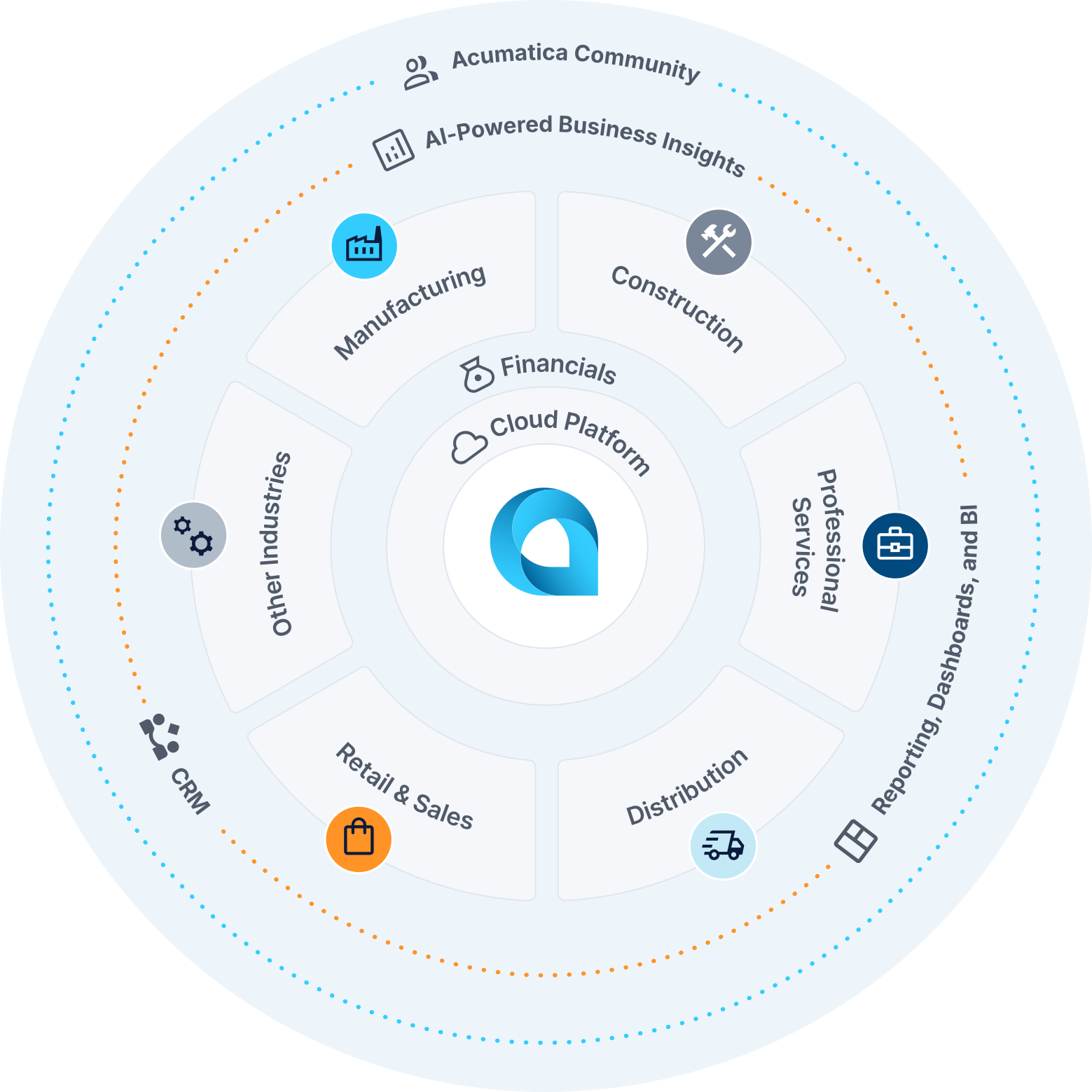
The value of a manufacturing ERP is not determined simply by how many features it contains. What matters is how those capabilities work together to support the daily decisions and processes that keep production moving.
For manufacturing managers, this means having better visibility across production, materials, inventory, purchasing, orders, and financial information without relying on disconnected spreadsheets or systems.
Acumatica brings these capabilities together within a unified cloud ERP environment, allowing manufacturers to connect production activities with the broader business. The following capabilities are particularly relevant to modern manufacturing operations.
Production Management
Production management provides the foundation for controlling manufacturing activities in a structured way. Instead of relying on separate spreadsheets or manual coordination, manufacturers can manage production orders and related production processes within the ERP environment.
This can help manufacturing teams maintain visibility into what needs to be produced, the requirements associated with production, and the current status of production activities.
Also Read: 10 Reasons Growing Businesses Are Switching to Acumatica ERP in 2026
For growing manufacturers, this becomes increasingly important as the number of products, orders, and production activities increases. Without a centralized system, production information can become difficult to track and coordinate across teams.
With production information managed within the ERP, manufacturers can work toward:
- Better control over production orders
- Greater visibility into production status
- Less manual coordination between teams
- More consistent production processes
- Improved understanding of production progress
The operational impact is a more structured approach to production management, giving manufacturing teams a clearer view of what is happening throughout the production process.
Material Requirements Planning (MRP)
Material requirements planning is critical when production depends on having the right materials available at the right time.
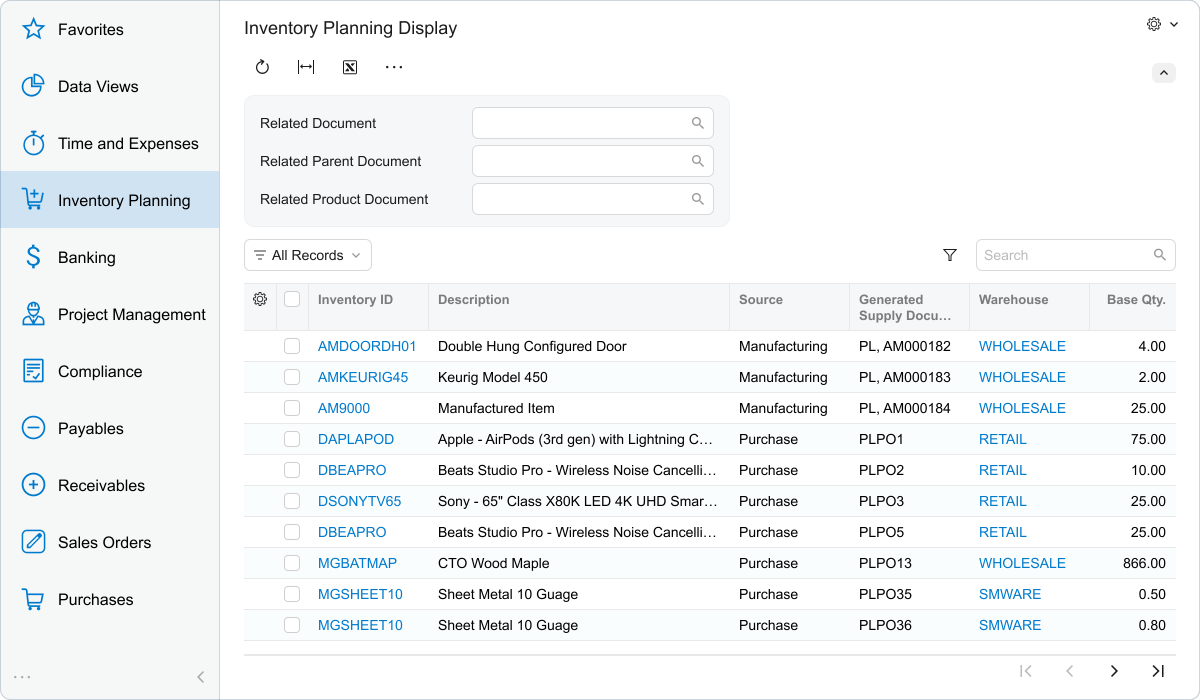
Manufacturers need to consider production requirements, demand, inventory availability, and supply when determining what materials are required. When these calculations are handled manually, planners may spend significant time consolidating information and checking whether sufficient materials are available.
Acumatica’s MRP capabilities help manufacturers plan material requirements based on relevant demand and supply information, connecting material planning with production and purchasing activities.
This can help manufacturers make better-informed decisions about:
- What materials are required for production
- When materials may be needed
- Whether existing inventory can support production requirements
- Which materials may require purchasing
- How material requirements relate to production plans
Better material planning can help reduce avoidable shortages, excess inventory, and production disruption caused by insufficient or poorly coordinated material information.
Bill of Materials (BOM)
A Bill of Materials defines the components and materials required to produce a finished product. For manufacturers producing multiple products or managing complex product structures, maintaining accurate BOM information is essential to production accuracy.
BOM information provides the structure needed to understand what goes into a product and what is required during production.
Within a connected manufacturing ERP environment, BOM information can support processes such as:
- Defining product structures
- Managing components and materials
- Establishing production requirements
- Supporting material planning
- Maintaining consistency across production processes
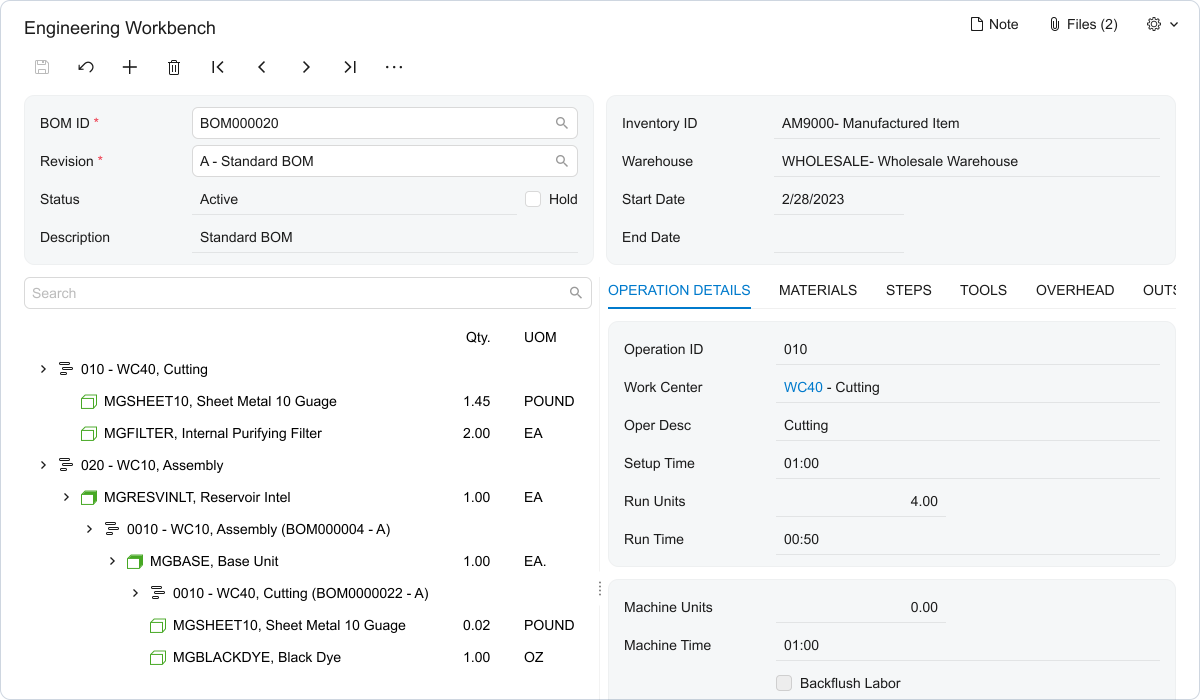
As products evolve, manufacturers may also need to manage changes to product composition and production requirements. Keeping this information structured within the ERP can improve visibility and reduce the risk of relying on outdated or inconsistent product information.
The operational impact is greater consistency between product requirements and the actual production process.
Production Planning and Scheduling
Production planning and scheduling become more challenging as manufacturers manage increasing demand, product variety, production priorities, and resource requirements.
Manufacturing managers need to coordinate what should be produced, when it should be produced, and how production activities should be organized. These decisions can become difficult when planning information is spread across spreadsheets or separate systems.
Acumatica supports production planning and scheduling within the broader ERP environment, helping manufacturers coordinate production requirements and maintain visibility into production schedules.
This can support manufacturers in:
- Planning production requirements
- Scheduling production work
- Coordinating available resources
- Managing production priorities
- Monitoring production progress
Better coordination between planning and execution can help manufacturers make more effective use of available resources while improving visibility into production schedules and priorities.
Shop Floor Control
Planning production is only one part of manufacturing. The business also needs visibility into what is actually happening on the shop floor.
Shop floor control connects production execution with the information maintained within the ERP. Production activities, labour or activity reporting, and production progress can be captured as part of the wider manufacturing process.
This helps create a stronger connection between what was planned and what is actually being executed.
For manufacturing teams, shop floor information can provide visibility into:
- Production activities
- Labour and activity reporting
- Production progress
- Operational data from production execution
When shop floor information is connected to production planning and other ERP processes, manufacturing managers can identify issues more quickly and work with more reliable production information.
The result is better visibility between planning and execution rather than treating the shop floor as a separate source of information.
Inventory Management for Manufacturing
Inventory is directly connected to manufacturing performance. Raw materials and components need to be available for production, work-in-progress needs to be controlled, and finished goods need to be visible as they move through the business.
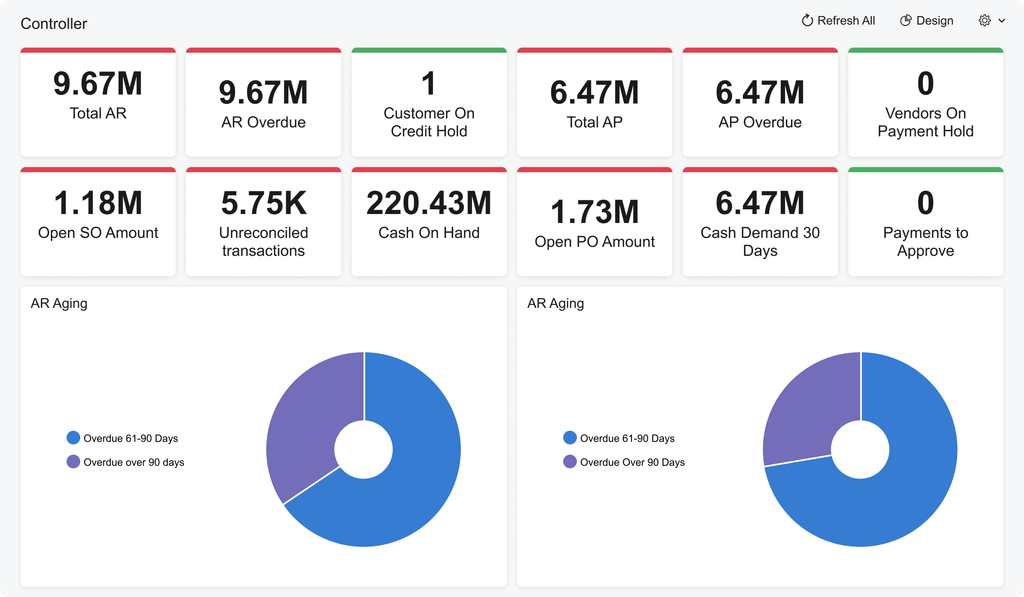
Poor inventory visibility can create problems at multiple stages of the manufacturing process. A material may appear available when it is already committed elsewhere, production may be delayed because a required component is unavailable, or management may lack an accurate view of inventory levels across the operation.
A connected ERP environment can provide manufacturers with visibility across different inventory requirements, including:
- Raw materials
- Components
- Work-in-progress
- Finished goods
- Inventory availability
- Inventory accuracy
By connecting inventory information with production, purchasing, and sales processes, manufacturers can gain a more complete understanding of how inventory supports the operation.
This can improve material visibility, strengthen inventory control, and help reduce production disruption caused by inaccurate or disconnected inventory information.
Purchasing and Supply Chain Coordination
Manufacturing does not operate independently from purchasing and supply chain activities. Production requirements create material requirements, material requirements can create purchasing requirements, and purchased materials ultimately need to support production.
A disconnected process can make this relationship difficult to manage. Purchasing teams may not have sufficient visibility into production requirements, while production teams may not have a clear view of incoming materials.
A connected ERP approach creates a more integrated flow:
Production Requirements → Material Requirements → Purchasing → Inventory → Production
This connection can help manufacturers improve coordination between purchasing and production, maintain better visibility of material availability, and reduce the number of disconnected processes involved in keeping production supplied.
For manufacturing managers, the benefit is not simply better purchasing administration. It is a clearer understanding of whether the supply side of the operation is aligned with production requirements.
Integrated Financial Management
Manufacturing decisions ultimately have financial consequences. Production activity affects inventory value and costs. Purchasing affects expenditure and material costs. Sales affect revenue, while operational efficiency can influence overall profitability.
This is where an integrated ERP environment becomes particularly valuable.
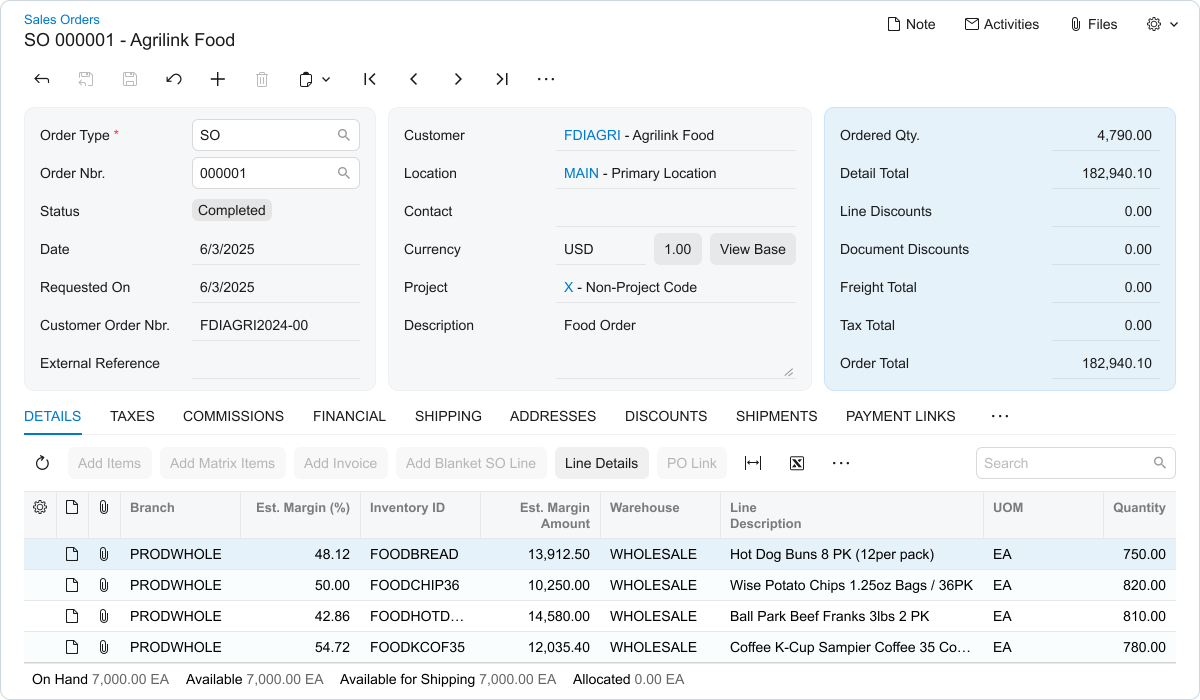
Instead of managing manufacturing information separately from financial information, Acumatica connects operational processes across areas such as:
Manufacturing → Inventory → Purchasing → Sales → Finance
For manufacturing managers, this connection provides a broader business context for operational decisions. The organization can work with operational and financial information within the same business environment rather than relying on separate systems and manual reconciliation.
This can help management better understand the relationship between manufacturing activity and wider business performance, including inventory value, production costs, purchasing activity, revenue, and profitability.
Dashboards, Reporting and Business Visibility
Manufacturing managers need more than transaction records. They need visibility that helps them understand what is happening across the operation and identify areas that require attention.
A connected ERP environment can bring together information related to production, inventory, orders, purchasing, and other operational activities, providing a broader view of manufacturing performance.
Depending on the organization’s reporting requirements, manufacturing teams may need visibility into areas such as:
- Production performance
- Inventory levels and availability
- Customer orders and demand
- Purchasing activity
- Production bottlenecks
- Manufacturing KPIs
- Operational trends
The objective is not simply to generate more reports. It is to make relevant information easier to access and use when making operational decisions.
For manufacturing managers, better business visibility can support faster identification of issues, more informed planning, and stronger coordination across departments.
Ultimately, the value of these capabilities comes from how they work together. Production management, MRP, BOM, scheduling, shop floor operations, inventory, purchasing, sales, and financial management are not isolated manufacturing functions. They are interconnected parts of the same operating environment.
A manufacturing ERP becomes more valuable when these processes can be managed through a connected system, giving manufacturers a clearer view of how operational decisions affect the rest of the business.
How Acumatica Connects the Manufacturing Operation
Manufacturing performance depends on how well different operational processes work together. Customer demand influences production requirements. Production requirements affect material planning. Material requirements influence purchasing and inventory, while production execution ultimately affects fulfilment, revenue, and financial performance.
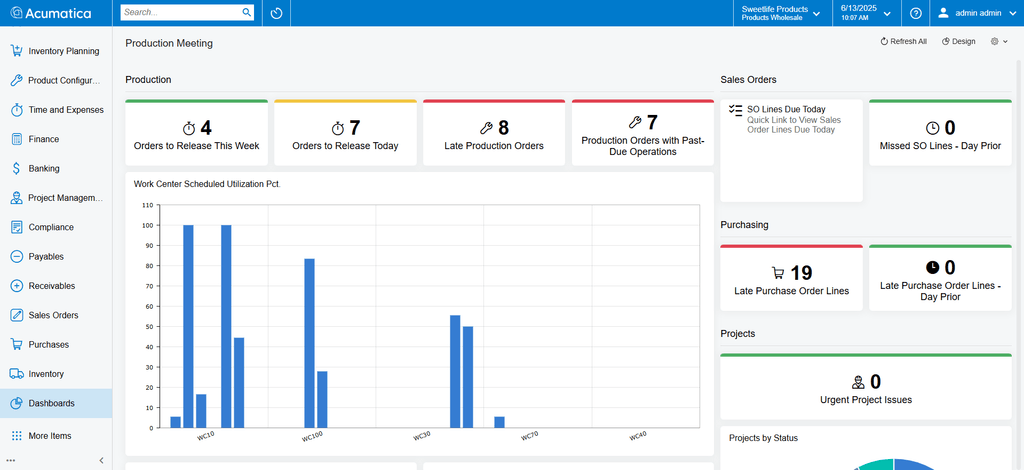
This is why an integrated ERP approach can be more valuable than managing each manufacturing process through separate systems.
Acumatica connects these activities within a broader ERP environment, creating a flow of information across the manufacturing operation:
Demand / Sales Orders
↓
Production Planning
↓
MRP & Material Requirements
↓
Purchasing / Inventory
↓
Production / Shop Floor
↓
Finished Goods
↓
Sales & Fulfilment
↓
Financial Reporting
From Demand to Production
The process begins with customer demand. Sales orders and other demand signals provide information that can influence production requirements.
Instead of treating sales information as something separate from manufacturing, an integrated ERP environment allows demand information to become part of the operational planning process.
This gives manufacturing teams a clearer connection between what customers require and what the business needs to produce.
From Production Planning to Material Requirements
Once production requirements are established, manufacturers need to determine what materials and components are required.
Production planning and MRP help connect production requirements with material requirements. This allows the business to consider existing inventory and identify materials that may need to be purchased to support planned production.
The important point is the connection between these activities. Production planning does not happen in isolation from materials planning.
From Material Requirements to Purchasing and Inventory
Material requirements can then influence purchasing and inventory activities.
When the required materials are already available, inventory information can support production planning. When materials are insufficient, purchasing becomes part of the process required to keep production supplied.
This creates a connected operational flow:
What needs to be produced → What materials are required → What is available → What needs to be purchased
For manufacturing managers, this connection can make it easier to understand whether material availability is aligned with production requirements.
From Inventory to Production and Shop Floor Execution
Once the required materials ared available, production can move into execution.
Shop floor activities provide information about what is actually happening during production, creating a connection between planned production and operational execution.
This distinction is important. Planning tells the business what should happen, while production execution provides visibility into what is actually happening.
Connecting the two gives manufacturing teams a stronger basis for identifying deviations, monitoring progress, and responding to operational issues.
From Production to Finished Goods and Fulfilment
As production is completed, finished goods become part of the wider inventory and fulfilment process.
The connection between manufacturing, inventory, sales, and fulfilment helps ensure that completed production is not treated as an isolated event. Finished goods can support customer order fulfilment and contribute to the broader flow of the business.
This creates a continuous relationship between customer demand and manufacturing output.
From Operations to Financial Reporting
The final connection is between operational activity and financial visibility.
Manufacturing affects inventory, purchasing, costs, sales, and ultimately financial performance. When these processes are managed within an integrated ERP environment, financial teams and management can work with information that is connected to the underlying business activities.
The result is a more complete view of the operation:
Demand → Planning → Materials → Purchasing → Production → Inventory → Fulfilment → Finance
This is an important distinction between using an ERP as simply a collection of individual modules and using it as an integrated business platform.
Also Read: What ERP Modules Do Small Manufacturing Businesses Really Need in 2026?
For modern manufacturers, the objective is not merely to digitize individual manufacturing tasks. It is to connect the processes that influence one another so that teams can work from a more consistent view of the business.
Acumatica’s role in this model is therefore broader than manufacturing alone. Its manufacturing capabilities operate within a wider Cloud ERP environment, connecting production with inventory, purchasing, sales, fulfilment, and financial management.
Acumatica Manufacturing vs. Disconnected Manufacturing Systems
As manufacturing operations become more complex, the challenge is often not that individual systems are incapable of performing their intended tasks. The bigger issue is what happens when important manufacturing processes are managed separately.
Also Read: Acumatica vs SAP Business One: Which ERP Fits Growing Companies Better?
Production, inventory, purchasing, sales, and finance all generate information that affects one another. When these activities are handled through disconnected systems, spreadsheets, or separate workflows, teams may need to manually reconcile information before they can understand the full operational picture.
An integrated ERP approach takes a different approach by connecting these processes within one business environment.
The difference can be seen across several important areas:
| Area | Disconnected Systems | Integrated ERP |
|---|---|---|
| Production data | Production information may be maintained separately across systems or spreadsheets. | Production information is connected with other relevant business processes. |
| Inventory visibility | Information can be fragmented or require manual reconciliation. | Inventory information is connected with production, purchasing, and other operational processes. |
| Material planning | Planning may require manual coordination between production, inventory, and purchasing teams. | Material requirements can be connected with production planning and supply activities. |
| Purchasing | Purchasing workflows may operate separately from production requirements. | Purchasing can be connected to material requirements and inventory information. |
| Financial visibility | Finance may need to consolidate information from multiple operational sources. | Financial information can be connected with operational activity within the ERP. |
| Reporting | Reports may rely on information collected from multiple sources. | Business information can be brought together within a unified ERP environment. |
| Decision-making | Teams may spend more time gathering and validating information before making decisions. | Connected information can provide a broader operational view for decision-making. |
The purpose of this comparison is not to suggest that every disconnected system is inadequate. Separate systems can work effectively when business processes are relatively simple or when the information flow between them is well managed.
The challenge emerges as operational complexity increases.
A manufacturer managing more products, production orders, suppliers, inventory, customer requirements, and business entities may find that maintaining accurate information across multiple systems requires increasingly more manual coordination.
Why Connected Information Matters
Consider a simple production scenario.
A customer order creates additional production requirements. Those requirements increase the need for certain materials. If available inventory is insufficient, purchasing may need to source additional materials. Once the materials arrive, production needs to incorporate them into the manufacturing process. The resulting finished goods then need to be available for fulfilment, while the financial impact of these activities needs to be reflected in the business’s financial information.
These are not seven unrelated processes. They are different stages of one connected business workflow.
When information moves between disconnected systems, each handoff creates another opportunity for delays, duplicate data entry, inconsistent information, or manual reconciliation.
An integrated ERP reduces the need to treat these handoffs as separate information silos by connecting the underlying processes.
For manufacturing managers, the practical benefit is greater continuity of information across the operation.
Instead of asking:
“Which system has the information I need?”
the organization can work toward a more useful question:
“What is happening across the operation, and what does it mean for the next decision?”
That shift—from fragmented information to connected operational visibility—is one of the key reasons manufacturers consider moving toward an integrated manufacturing ERP.
Who Can Benefit from Acumatica Manufacturing?
Acumatica Manufacturing can be relevant to manufacturers at different stages of operational growth, particularly businesses that need stronger coordination between production, inventory, purchasing, sales, and financial management.
The need for a manufacturing ERP often becomes more apparent as operational complexity increases. A business may start with spreadsheets, accounting software, or separate applications, but eventually reach a point where managing information across multiple processes becomes increasingly difficult.
For Malaysian manufacturers evaluating whether a modern manufacturing ERP is appropriate for their operation, several situations can indicate that a more connected system may be worth considering.
Growing Manufacturers
Growth can introduce new operational challenges.
As production volumes increase, manufacturers may need to manage more production orders, materials, suppliers, customers, inventory, and employees. Processes that were previously manageable through spreadsheets or basic business software can become increasingly difficult to coordinate.
A growing manufacturer may benefit from a manufacturing ERP when the business needs to:
- Manage increasing production volumes
- Improve coordination between departments
- Gain better visibility into production and inventory
- Standardize operational processes
- Support business growth without continuously adding manual administrative work
The objective is not simply to replace existing systems because the business is growing. It is to establish an operational foundation that can support the next stage of growth.
Manufacturers Managing Increasing Product Complexity
Product complexity can make manufacturing planning significantly more demanding.
Manufacturers producing multiple product lines, variants, components, or complex assemblies need accurate information about what goes into each product and how those requirements affect production and materials.
A structured manufacturing ERP can help connect product structures, BOMs, material requirements, inventory, production planning, and execution.
This can be particularly relevant when manufacturers are experiencing:
- More product variations
- More complex BOM structures
- Increasing numbers of components
- Frequent changes to products or production requirements
- Greater coordination requirements between engineering, production, inventory, and purchasing
As product complexity increases, having consistent manufacturing information becomes increasingly important for maintaining operational control.
Manufacturers That Need Better Production Visibility
Production managers need to know what is happening on the shop floor and how actual production compares with what was planned.
When production information is spread across spreadsheets, manual reports, or separate systems, obtaining a current view of production status can require significant coordination.
A manufacturing ERP can provide a more connected environment for production planning, production orders, shop floor activities, inventory, and related operational information.
This can help manufacturers improve visibility into questions such as:
- What is currently being produced?
- Which production orders are in progress?
- Are required materials available?
- Where are production delays occurring?
- What production activities require attention?
- How is production performance changing over time?
For manufacturing managers, better visibility can provide a stronger basis for responding to operational issues and coordinating daily production activities.
Businesses Managing Multiple Operational Processes
Manufacturing involves far more than production alone.
A typical manufacturing operation may involve sales orders, demand planning, purchasing, inventory, warehousing, production, fulfilment, accounting, and financial reporting. When these processes are managed separately, teams may need to move information manually between systems.
This becomes increasingly difficult as the business grows.
Acumatica Manufacturing is designed to operate within a broader ERP environment, allowing manufacturing processes to connect with other business functions.
For example:
Sales → Production Planning → MRP → Purchasing → Inventory → Production → Fulfilment → Finance
This connected approach can help businesses reduce information silos and provide teams with a broader view of how operational activities affect one another.
Manufacturers Considering ERP Modernisation
Some manufacturers may already have an ERP system but are evaluating whether it still supports their current business requirements.
An existing system may have been appropriate when the business was smaller, but changes in production complexity, reporting requirements, business structure, integration needs, or growth plans can create new requirements.
ERP modernisation may therefore become relevant when manufacturers are:
- Outgrowing legacy systems
- Relying heavily on spreadsheets alongside their ERP
- Managing disconnected applications
- Experiencing limited operational visibility
- Looking for stronger integration between manufacturing and finance
- Preparing for business expansion
- Evaluating a move toward Cloud ERP
For Malaysian manufacturers considering this transition, the decision should not be based only on replacing old technology. The more important question is whether the new ERP can support the organization’s current operating model and its future business requirements.
Also Read: Why Acumatica Is Ideal for Fast-Growing SMEs in Malaysia
Ultimately, Acumatica Manufacturing is most relevant when a manufacturer needs more than basic transaction processing. Businesses looking for greater coordination between production and the wider organization can evaluate whether an integrated manufacturing ERP aligns with their operational requirements, growth plans, and digital transformation objectives.
Is Acumatica Manufacturing Right for Your Business?
Choosing a manufacturing ERP is not simply a matter of selecting a system with the right list of features. The more important question is whether the platform addresses the operational challenges your manufacturing business is experiencing today and can support the way the business plans to grow.
Acumatica Manufacturing may be worth evaluating if your business is experiencing several of the following situations:
You Have Outgrown Spreadsheets or Disconnected Systems
Spreadsheets and separate applications can be useful when operations are relatively simple. However, as production volumes, product complexity, inventory, and business processes increase, maintaining accurate information across multiple systems can become increasingly difficult.
If teams frequently move information between spreadsheets and systems, manually reconcile data, or maintain separate versions of operational information, it may be time to evaluate a more integrated ERP approach.
You Struggle With Production Visibility
Manufacturing managers need to understand what is happening across production—not only after the work has been completed, but while operations are taking place.
If it is difficult to determine the current status of production orders, identify delays, monitor production progress, or understand where operational issues are occurring, a manufacturing ERP may provide a more structured way to connect production planning and execution.
You Have Difficulty Coordinating Inventory and Production
Production depends on material availability.
If inventory information is difficult to reconcile with production requirements, manufacturing teams may encounter situations where materials appear available but are not sufficient for planned production, or where purchasing decisions are made without a complete view of production requirements.
Connecting inventory and production information can provide better visibility into whether available materials can support planned manufacturing activities.
You Need Better Material Planning
Material shortages can disrupt production, while excessive inventory can tie up working capital.
If your team spends significant time manually determining material requirements, checking inventory, and coordinating purchasing, it may be worth evaluating an ERP with integrated MRP and material planning capabilities.
The objective is to create a clearer connection between production requirements, material availability, and purchasing decisions.
You Want Production and Financial Information Connected
Manufacturing decisions have financial consequences.
Production activity affects inventory, purchasing affects costs, and sales and fulfilment affect revenue. If manufacturing and financial information are managed separately, management may have to consolidate information from different sources to understand the broader business impact.
An integrated ERP can connect operational activity with financial management, helping provide a more complete view of the business.
Your Business Is Expanding
Growth can introduce new levels of operational complexity.
As your business expands into additional product lines, production volumes, facilities, markets, or business entities, processes that worked previously may become harder to manage.
This can create a need for a more scalable ERP environment that can support increasing operational requirements without relying on increasingly complex manual processes.
You Need a Scalable Cloud ERP Platform
Cloud ERP can provide a foundation for businesses looking to modernize their technology environment while supporting changing operational requirements.
For manufacturers evaluating a cloud ERP platform, important considerations include manufacturing functionality, integration, scalability, reporting, security, implementation requirements, and ongoing support.
The right choice will depend on the organization’s specific processes, requirements, and growth plans.
You Are Evaluating a Manufacturing ERP in Malaysia
If your organization is actively evaluating manufacturing ERP in Malaysia, the assessment should go beyond a feature comparison.
Consider whether the ERP can support your manufacturing processes, connect production with finance and other business functions, provide the visibility management requires, and scale with the organization’s future plans.
It is also important to evaluate the implementation partner—not only the software. Manufacturing ERP implementation involves business processes, data, users, integrations, training, and change management. Local expertise and ongoing support can therefore be important considerations.
Ultimately, the purpose of an ERP evaluation is to determine whether the platform and implementation approach fit the way your business operates.
If several of the situations above describe your organization, Acumatica Manufacturing may be worth exploring in greater detail as part of your manufacturing ERP evaluation.
What to Consider When Choosing a Manufacturing ERP in Malaysia
Choosing a manufacturing ERP is a long-term business decision. The right platform needs to support the way your manufacturing operation works today while providing enough flexibility to accommodate future growth, changing requirements, and increasing operational complexity.
For manufacturers evaluating manufacturing ERP in Malaysia, the assessment should therefore go beyond comparing feature lists or software prices. Consider the following areas before making a decision.
Manufacturing Functionality
The ERP should provide capabilities that address the actual requirements of your manufacturing operation.
Depending on the business, this may include production management, BOMs, MRP, production planning and scheduling, shop floor operations, inventory management, purchasing, and production-related reporting.
The important question is not simply whether a system has a particular feature. It is whether those capabilities support your actual manufacturing processes and work together as part of a connected workflow.
Manufacturers should consider:
- Production processes and workflows
- Product and BOM complexity
- Material requirements planning
- Production planning and scheduling
- Shop floor requirements
- Inventory and warehouse processes
- Purchasing and supply requirements
- Manufacturing reporting and KPIs
A good evaluation should therefore begin with your operational requirements rather than starting with a software feature checklist.
Integration Across the Business
Manufacturing does not operate independently from the rest of the organization.
Sales affects demand. Demand affects production. Production affects materials and inventory. Purchasing supports material availability, while manufacturing and sales activities ultimately affect financial performance.
An ERP should be able to connect these processes rather than creating another operational silo.
Look at how the system connects:
Sales → Planning → MRP → Purchasing → Inventory → Production → Fulfilment → Finance
The stronger these connections are, the easier it can be for different departments to work from consistent business information.
Integration should also be considered beyond the core ERP. Manufacturers may need connections with CRM platforms, e-commerce systems, warehouse technologies, payroll, banking, business intelligence tools, or other applications used within the organization.
Scalability
An ERP should not only solve today’s problems. It should also be able to support the business as operational requirements change.
Manufacturers should consider what happens when the organization:
- Increases production volume
- Adds new products
- Expands into new locations or markets
- Adds warehouses or facilities
- Increases its number of users
- Introduces additional business entities
- Requires more sophisticated reporting
- Expands its integration requirements
Scalability is therefore broader than system capacity. It includes whether the ERP can adapt to changes in the organization’s processes and structure without requiring the business to replace its core system again.
Cloud Architecture
For manufacturers considering a modern ERP, the underlying technology architecture is another important consideration.
A cloud ERP can provide organizations with a modern platform for accessing business information and supporting distributed operations. However, manufacturers should look beyond the term “cloud” itself.
Consider how the platform handles:
- System accessibility
- Updates and upgrades
- Data security
- Integration
- System scalability
- User access
- Business continuity
- Infrastructure management
The objective is to understand how the cloud architecture supports the organization’s long-term technology and business requirements rather than selecting a system simply because it is marketed as cloud-based.
Reporting and Operational Visibility
Manufacturing managers need information that can support operational decisions.
An ERP evaluation should therefore consider whether the system can provide visibility into the areas that matter most to the organization, such as:
- Production performance
- Production status
- Inventory availability
- Material requirements
- Purchasing activity
- Customer demand
- Operational KPIs
- Financial performance
The quality of reporting also matters. Information should be accessible in a form that different users can understand and act upon.
For management, this may mean dashboards and high-level KPIs. For production teams, it may mean detailed production and inventory information.
The objective is not to produce more reports. It is to make relevant business information more accessible for better decision-making.
Implementation and Local Expertise
Selecting the ERP platform is only one part of a successful ERP project. The implementation approach and expertise of the implementation partner can have a significant impact on how effectively the system supports the business.
Manufacturing ERP implementation typically involves more than software configuration. It may include:
- Business process analysis
- ERP solution design
- Data migration
- System configuration
- Customization
- Integration
- User training
- Change management
- Testing
- Go-live support
For manufacturers in Malaysia, local implementation expertise can also be relevant when evaluating potential ERP partners. The partner should understand the organization’s business processes and be able to translate operational requirements into an appropriate ERP solution.
This is particularly important for manufacturing businesses with complex workflows or requirements that extend beyond standard software configuration.
For Netsense Business Solutions, this is where the implementation partnership becomes part of the overall ERP value. As an Acumatica Gold Certified Partner, Netsense provides services spanning ERP consulting, implementation, customization, integration, data migration, training, and ongoing support.
The focus should remain on aligning the ERP with the manufacturer’s business processes rather than simply deploying software.
Long-Term Support and Optimisation
ERP implementation should not be viewed as the end of the project.
Once the system is live, businesses may identify new requirements, introduce new processes, expand operations, or need additional integrations and reporting. Users may also require additional training as their responsibilities evolve.
This makes long-term support an important part of the ERP evaluation.
Manufacturers should consider:
- What support is available after go-live?
- Who will handle system issues and questions?
- Can the partner support future customisation and integration requirements?
- Is additional training available?
- Can the ERP environment evolve as the business changes?
- How will the system be reviewed and optimised over time?
A long-term ERP relationship should provide a path for continuous improvement rather than treating implementation as a one-time technology project.
Ultimately, choosing a manufacturing ERP in Malaysia requires looking at the complete picture: manufacturing capabilities, business integration, scalability, cloud architecture, visibility, implementation expertise, and long-term support.
The goal is to select an ERP and implementation approach that can support the way the business operates today while providing a foundation for future growth.
Why Work with Netsense Business Solutions for Acumatica Manufacturing?
Choosing a manufacturing ERP is not only about selecting the software. The implementation partner also plays an important role in understanding the business, translating operational requirements into the ERP, and supporting the organization throughout its ERP journey.
For manufacturers evaluating Acumatica, Netsense Business Solutions takes a business-first approach: understand the manufacturing operation first, then configure the ERP around the business.
Acumatica Gold Certified Partner
Netsense Business Solutions is an Acumatica Gold Certified Partner, providing expertise in Acumatica Cloud ERP and its implementation for businesses in Malaysia.
This provides manufacturers with access to a partner focused on helping businesses evaluate, implement, and optimize Acumatica based on their operational requirements.
Manufacturing and Business Process Expertise
A manufacturing ERP should reflect how the business actually operates.
Netsense works with businesses to understand processes across areas such as production, inventory, purchasing, sales, finance, and reporting before determining how the ERP should support those processes.
This approach helps ensure that the implementation is aligned with the organization’s operational requirements rather than treating ERP implementation as a simple software deployment.
Business-First ERP Consulting
Netsense does not approach ERP implementation as simply selling software licenses.
The process starts with understanding the business: its objectives, current processes, operational challenges, information requirements, and areas where greater visibility or efficiency is needed.
The principle is straightforward:
Understand the manufacturing operation first. Then configure the ERP around the business.
This allows the ERP solution to be evaluated in the context of real business processes and future growth requirements.
End-to-End Implementation and Support
Manufacturing ERP projects involve more than initial system configuration. They can include business process analysis, implementation, customization, integration, data migration, training, and ongoing support.
Netsense Business Solutions provides these services as part of an end-to-end ERP partnership, helping manufacturers move from ERP evaluation through implementation and continued system optimisation.
For businesses considering Acumatica Manufacturing, this means the conversation can begin with the manufacturing operation and its business requirements, rather than with a generic software demonstration.
The next step is to explore how Acumatica Manufacturing capabilities could apply to your specific production environment, processes, and growth objectives.
Frequently Asked Questions About Acumatica Manufacturing
What is Acumatica Manufacturing?
Acumatica Manufacturing is a set of manufacturing capabilities within the Acumatica Cloud ERP platform that helps manufacturers manage production and connect manufacturing processes with inventory, purchasing, sales, and financial management.
What features does Acumatica offer for manufacturing?
Acumatica provides manufacturing capabilities including production management, Material Requirements Planning (MRP), Bill of Materials (BOM), production planning and scheduling, shop floor operations, inventory management, purchasing, and integrated financial management.
Does Acumatica support MRP?
Yes. Acumatica supports Material Requirements Planning (MRP), helping manufacturers plan material requirements based on factors such as demand, production requirements, and inventory availability.
MRP can help connect production planning with material requirements and purchasing activities.
Can Acumatica manage production planning and scheduling?
Yes. Acumatica supports production planning and scheduling, allowing manufacturers to coordinate production requirements, schedules, and related operational activities within the ERP environment.
This can help provide greater visibility into production priorities and progress.
Can Acumatica connect manufacturing with inventory and finance?
Yes. Acumatica is designed as an integrated Cloud ERP platform, allowing manufacturing processes to connect with inventory, purchasing, sales, fulfilment, and financial management.
This provides a more connected view of operational and financial information across the business.
Is Acumatica suitable for growing manufacturers in Malaysia?
Acumatica can be considered by growing manufacturers in Malaysia that need to connect production with other business processes and improve operational visibility.
Suitability depends on the manufacturer’s specific requirements, including production processes, product complexity, business structure, integration needs, reporting requirements, and growth plans.
How do I evaluate a manufacturing ERP in Malaysia?
Start by identifying your manufacturing processes, operational challenges, information requirements, integration needs, and future growth plans.
Then evaluate ERP platforms based on areas such as manufacturing functionality, MRP, production planning, inventory, scalability, integration, reporting, cloud architecture, implementation expertise, and long-term support.
The implementation partner should also be evaluated alongside the software because ERP success depends on both the technology and how it is implemented within the business.
Can Netsense help implement Acumatica Manufacturing?
Yes. Netsense Business Solutions provides Acumatica ERP consulting and implementation services, including business process analysis, implementation, customization, integration, data migration, training, and ongoing support.
As an Acumatica Gold Certified Partner, Netsense can help manufacturers evaluate and implement Acumatica based on their specific operational and business requirements.
Explore Acumatica Manufacturing
Modern manufacturing requires more than software that simply records transactions. Manufacturers need connected processes that help them plan production, manage materials and inventory, coordinate shop floor operations, fulfil customer demand, and maintain visibility across the wider business.
Acumatica Manufacturing brings these capabilities together within an integrated Cloud ERP platform, helping manufacturers connect production planning, MRP, inventory, purchasing, shop floor operations, sales, and financial management in one business environment.
If your manufacturing operation is outgrowing spreadsheets, disconnected systems, or legacy ERP processes, exploring the right manufacturing ERP can be an important step toward improving operational visibility and supporting future growth.
Explore how Acumatica can support your manufacturing operation.
Explore Acumatica Manufacturing
Looking for a manufacturing ERP that fits your specific processes and business requirements?
Speak with a Manufacturing ERP Expert
Netsense Business Solutions
Acumatica Gold Certified Partner
Malaysia
Website: netsense.my
Email: info@netsense.my / sales@netsensebs.com
Phone: 603 278 83705